Concrete Delivery for Commercial Sites: Staging, Pump vs Truck, and Pour Sequencing
Commercial concrete delivery coordination is what keeps big pours on schedule staging, placement method, and pour sequencing all have to work together to avoid delays and protect finish quality.
Commercial concrete delivery coordination starts with a staging plan
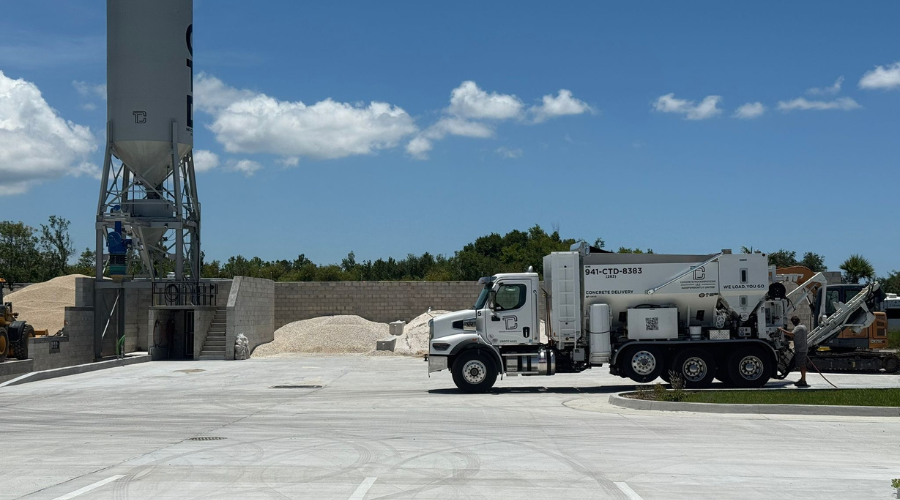
Before you book trucks, confirm your entry/exit route, turning radius, overhead clearance, stable ground, a designated waiting area, and a washout location. A simple staging plan prevents backups, keeps the pump zone clear, and helps your crew maintain a steady placement rhythm.
Pump vs truck placement: choose based on access and production
Pump placement is often the right call when you need reach (behind structures, over rebar mats, or inside tight footprints) or when you’re trying to maintain a steady high-volume placement rate. Direct chute placement can be faster and simpler when trucks can get close to the forms and you can keep the chute moving without excessive buggy or wheelbarrow traffic.
The key is matching the placement method to the site constraints and the crew’s ability to place, screed, and finish at a consistent pace.
Pour sequencing tips to avoid cold joints and rework
Good sequencing prevents stop-start placement and protects the finishing window.
- Start at the farthest point from the exit so you’re not driving over fresh work.
- Pour the hardest-to-access areas first before the site gets crowded.
- Break large slabs into zones with clear handoff points for screed and finish crews.
- Identify transitions (doorways, narrow corridors, thick-to-thin sections) where cold joints are most likely if the pour slows.
Commercial concrete delivery coordination: quick pour-day checklist
Commercial concrete delivery coordination works best when the crew, the site, and the delivery pace are aligned before the first yard hits the forms.
Before trucks arrive
- Confirm access is clear (gates unlocked, lanes not blocked, spotter assigned).
- Verify staging: where trucks wait, where they wash out, and how they’ll exit.
- Confirm placement method: pump vs truck chute, plus who is directing placement.
- Walk the pour path and flag tight areas where cold joints can form if placement stops.
During placement
- Keep a steady rhythm. If the crew is waiting on concrete, productivity drops; if the crew is chasing concrete, finish quality suffers.
- Work the sequence so finishing crews aren’t trapped and traffic stays off fresh work.
After placement
- Follow the project’s curing plan (compound, plastic, blankets, or spec requirements).
- Keep the site clear so finishing and protection steps aren’t interrupted.
Helpful resources
- The Future of Concrete Delivery: Why Contractors Are Switching to Volumetric Trucks
- American Concrete Institute (ACI)
- OSHA construction safety resources